
English
English
Views: 0 Author: Site Editor Publish Time: 2025-12-19 Origin: Site


When selecting shock absorbers for an ATV, load weight plays a far more important role than many riders realize. The total weight carried by the vehicle directly influences how the suspension reacts to terrain, as heavier loads place greater stress on the shocks during compression and rebound.
If shock absorbers are not matched to the ATV’s typical load, suspension behavior can change noticeably. Shocks that are too soft may compress excessively, while overly stiff shocks can reduce traction and responsiveness. Both situations affect ride comfort, handling stability, and long-term component wear.
By understanding how load weight interacts with shock absorbers, riders and fleet operators can make more informed suspension choices. Proper load matching helps the suspension work within its intended range, maintaining consistent control while balancing comfort and durability across different riding conditions.
Load weight significantly influences shock absorber performance.
Matching shocks to load helps maintain ATV stability and ride comfort.
Incorrect shock selection can cause handling problems and quicker wear.
Overloaded shocks reduce suspension travel and increase component stress.
Proper load-rated shocks improve durability under real off-road conditions.
ATV shock absorbers are one of the key components influencing overall vehicle performance, particularly ride comfort, stability, and suspension longevity. As load weight changes, the forces acting on the shocks also shift, directly affecting how the suspension reacts to uneven terrain and repeated impacts.
When operating within the intended load range, shock absorbers help manage suspension movement and soften harsh bumps. However, if the load is consistently too heavy or too light, the suspension may feel unstable, reduce riding comfort, and accelerate wear on related components over time.
Most ATVs use spring-based shock absorbers combined with hydraulic damping. These designs are widely used because they offer a practical balance between load support, durability, and ride comfort for common ATV applications.
Rather than supporting a single fixed weight, each shock absorber is designed to work within a specific load range. Spring rate and damping characteristics determine how well the shock performs under different loads. If the actual load consistently falls outside this range, riders may experience reduced comfort, less predictable handling, and accelerated component wear.
Load weight directly impacts how the suspension moves and absorbs energy. Heavier loads compress the springs more, meaning the shock absorber has to work harder to control suspension movement.
Increased load causes faster wear on parts and can reduce the damping efficiency if the shock isn't designed for that weight. If shocks are too soft for a heavy load, the ATV will sag, and handling will suffer. On the other hand, shocks that are too stiff for a light load can cause a bumpy ride because the suspension won't move freely.
Proper shock selection based on load weight ensures consistent performance. It maintains ride comfort, stability, and helps avoid damage to the suspension system under different operating conditions.
Load weight does not affect a shock absorber evenly. Different internal components respond differently when weight increases, which is why load matching matters in shock selection.
The spring carries most of the static load and determines how much the suspension compresses under weight. If the spring rate is too low for the actual load, the suspension may sag excessively, reducing usable travel.
The damper manages how quickly the suspension moves under load changes. As load increases, inadequate damping can lead to repeated bouncing or unstable responses over rough terrain, even if the spring itself is strong enough.
These components work together rather than independently. When load weight falls outside the intended range, the imbalance between spring support and damping control becomes noticeable, affecting ride comfort, stability, and long-term durability.
Load weight influences how shock absorbers in an ATV react to different terrains and conditions. The way weight is spread across the vehicle affects suspension behavior, requiring specific damping settings. Load changes also impact the rider's control and the vehicle's stability during motion.
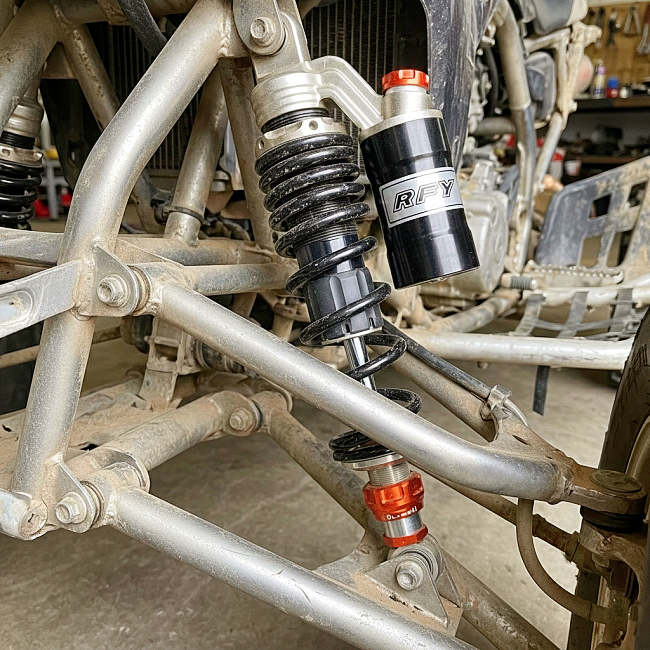
When load weight is unevenly distributed, each shock absorber responds differently. A rear-heavy load, for example, compresses the rear suspension more than the front, reducing usable suspension travel and altering vehicle balance. Over time, this imbalance can affect tire contact, traction, and overall ride stability.
| Load Distribution Scenario | Suspension Response | Practical Impact |
| Rear-heavy load | Rear shocks compress more than front | Reduced front traction, unstable steering |
| Front-heavy load | Front suspension travel limited | Harsher ride, reduced bump absorption |
| Uneven side load | One shock works harder than the other | Accelerated wear, uneven handling |
| Balanced load | Even suspension compression | Stable handling and consistent ride comfort |
 Note: Load distribution is often overlooked but plays a major role in how shock absorbers perform over time. Even when total vehicle weight is within limits, uneven loading can increase stress on individual shocks. For optimal suspension response and durability, load position should always be considered alongside shock specifications.
After understanding how load distribution affects suspension response, damping adjustment becomes the next key factor in controlling suspension behavior under different load conditions.
| Load Condition | Compression Damping | Rebound Damping | Practical Result |
| Light load | Softer | Moderate | Smoother response over small bumps |
| Medium load | Balanced | Balanced | Stable ride with controlled movement |
| Heavy load | Stiffer | Increased | Prevents bottoming out and excessive rebound |
| Uneven load | Adjust as needed | Fine-tune | Improves control and reduces shock stress |
Adjustment Tip: Damping settings should always be adjusted based on real load conditions rather than static specifications alone. Fine-tuning compression and rebound helps maintain control, reduce component stress, and extend shock service life under varying loads.
When an ATV carries additional weight—such as cargo, tools, or a passenger—the way it behaves on the trail changes noticeably. Acceleration becomes slower, braking distances increase, and the vehicle feels less willing to change direction. These changes are not just caused by the extra weight itself, but by how that weight shifts the ATV's balance during real riding situations.
On uneven terrain, added load places more stress on the suspension during cornering, braking, and repeated bumps. If the shock absorbers are not matched to the load, the ATV may feel unstable when turning, or unsettled after hitting a series of small impacts. Riders often describe this as the vehicle feeling "loose" or "hard to control", especially on rough trails or at moderate speeds.
Properly selected and adjusted shock absorbers help the suspension respond more consistently under load. By keeping the tires in better contact with the ground, they support stable handling and predictable control across different riding conditions. This becomes especially important when load weight changes frequently, such as switching between unloaded riding and working or utility use.
Selecting ATV shock absorbers should start with understanding how the vehicle is actually used, not just its listed curb weight. An ATV carrying tools, cargo racks, or a passenger places very different demands on the suspension than one used for light recreational riding.
The first step is matching the shock's load range to the real operating weight, including accessories and typical cargo. If the load regularly exceeds the spring's working range, no amount of damping adjustment will fully compensate. In these cases, selecting an appropriate spring rate becomes essential to maintain proper suspension travel and ride height.
Adjustability then adds flexibility. For ATVs that experience changing loads—such as work ATVs used both empty and fully loaded—adjustable damping allows fine-tuning without replacing components. This balance between load capacity, spring support, and adjustability ensures the suspension performs predictably and sets the foundation for correct damping setup in the next step.
Shock absorbers should be selected based on the ATV's real operating load, not just the base vehicle weight. In practice, this includes the rider, carried tools or cargo, mounted accessories, and any additional rear or front racks that shift weight distribution.
Using shocks designed for lighter loads often leads to excessive suspension compression under real-world conditions. This can reduce available travel, affect steering response, and accelerate wear on bushings and seals. On the other hand, shocks rated far above the actual load may feel overly stiff, limiting suspension movement and reducing ride comfort on uneven terrain.
A practical approach is to estimate the typical loaded weight and select shocks that operate comfortably within that range, rather than at the extreme limit. In suspension development and fitment work—such as the load-matching practices commonly applied in RFY SHOCK setups—this balance between rated capacity and actual usage is critical for maintaining stable handling and predictable suspension response over time.
Manufacturer load ratings and recommended weight ranges provide a useful reference, but final selection should also consider how consistently the ATV carries that load—an important factor when deciding whether adjustability is necessary.
Spring rate plays a key role in how well shocks support different load conditions. It defines how much force is required to compress the spring, directly affecting ride height, suspension travel, and control under weight.
For lighter setups—such as solo riding or minimal cargo—a softer spring improves comfort and helps the tires follow uneven ground. As load increases from passengers, tools, or accessories, a higher spring rate becomes necessary to prevent excessive sag and maintain proper suspension geometry. The goal is not stiffness for its own sake, but consistent tire contact and predictable handling.
Rather than relying on guesswork, matching spring rate to realistic load ranges provides a more reliable foundation for overall suspension setup—especially before fine-tuning damping adjustments or selecting adjustable shocks
Spring rate plays a key role in how well shocks support different load conditions. It defines how much force is required to compress the spring, directly affecting ride height, suspension travel, and control under weight.
For lighter setups—such as solo riding or minimal cargo—a softer spring improves comfort and helps the tires follow uneven ground. As load increases from passengers, tools, or accessories, a higher spring rate becomes necessary to prevent excessive sag and maintain proper suspension geometry. The goal is not stiffness for its own sake, but consistent tire contact and predictable handling.
Rather than relying on guesswork, matching spring rate to realistic load ranges provides a more reliable foundation for overall suspension setup—especially before fine-tuning damping adjustments or selecting adjustable shocks
Q: How do I calculate the actual load my ATV shocks need to support?
A: Actual load includes the ATV's base weight, rider weight, cargo, and any added accessories. For accurate shock selection, the combined maximum operating weight should be considered rather than unloaded vehicle weight alone.
Q: Can I use the same shock setup for light and heavy loads?
A: Standard shocks are designed for a specific load range. While adjustable damping can fine-tune performance, large load changes often require different spring rates to maintain proper suspension behavior.
Q: What happens if the spring rate is too soft for the load?
A: A spring rate that is too soft may cause excessive sag, frequent bottoming out, and reduced control, especially on uneven terrain or under sustained heavy loads.
Q: Do heavier loads always require stiffer damping?
A: Heavier loads typically need increased damping to control suspension movement, but damping should be adjusted carefully. Excessively stiff damping can reduce comfort and traction if not matched to spring behavior.
Q: How often should shock setup be reviewed for load changes?
A: Shock setup should be reviewed whenever the ATV's typical load changes significantly, such as when adding accessories, switching usage types, or operating with different rider or cargo weights.
If you are evaluating shock absorbers for varying load conditions, working with manufacturers or suppliers who provide clear load and spring data can help ensure proper matching and long-term suspension reliability.


